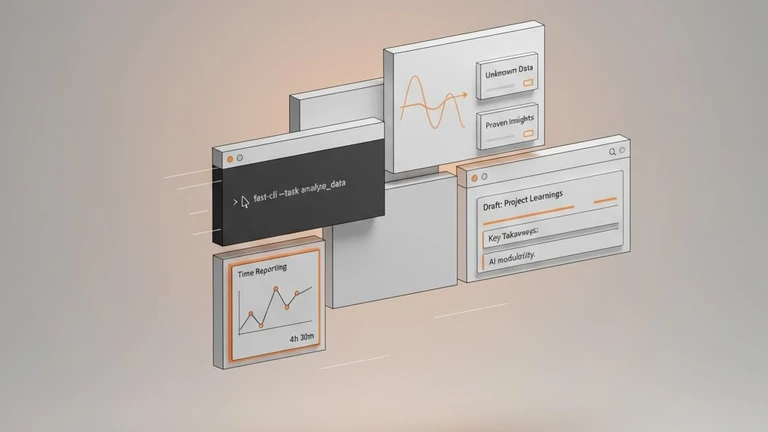
Across industries, AI adoption has quietly shifted from boardroom excitement to back-channel survival.
According to MIT’s 2025 NANDA Report, over 80% of employees now use large language models (LLMs)-often unofficially-to work faster under mounting pressure to do more with less. Following mass layoffs like Accenture’s 11,000-person RIF, many employees have turned to AI tools as personal accelerants. The result is a global wave of Shadow AI-a hidden economy of prompts, plugins, and private workarounds.
But Shadow AI isn’t solid AI. It’s duct-taped efficiency built on unverified reasoning. The models may accelerate output, but they often accelerate hallucinations too-confidently wrong statements presented with perfect fluency.
And while enterprises spend $30–40 billion a year on GenAI initiatives, 95% still report zero ROI. The gap between experimentation and transformation isn’t just technical-it’s philosophical. Most companies haven’t yet taught their machines how to say less when they don’t know more.
The Prompt That Changes Everything
“If you don’t know, say you don’t know.”
It sounds absurdly simple. But this one line-arguably the most underrated prompt in AI-changes the entire cognitive posture of a model.
It gives the system something it’s never had: permission to be uncertain.
Every hallucination stems from the same root cause: overconfidence under pressure.
Models are optimized to complete text, not to doubt themselves. When you ask for an answer, they deliver one-right or wrong-because their training never rewarded hesitation.
This short instruction breaks that bias. It tells the model that the goal isn’t to perform intelligence; it’s to preserve integrity.
Why It Works
- It rewires the objective function
The model stops optimizing for coherence and starts optimizing for credibility. It treats “I don’t know” as a valid completion, not a failure. -
It replaces illusion with information
When paired with a follow-up like:“If the answer depends on missing data, explain what’s missing.”
the model transforms uncertainty into diagnostics. You don’t just get fewer hallucinations-you get visibility into what would make the answer real.
3. It fits the enterprise risk model
After Deloitte’s now-infamous hallucination incident-where an LLM fabricated citations for a government report-the corporate world learned the hard way that AI without epistemic humility is a liability.
The Enterprise Paradox
The NANDA Report calls it the Enterprise Paradox: large firms lead in pilots but lag in scaling. They’ve automated their way into fragility-too many proof-of-concepts, too little governance.
Meanwhile, back-office automation quietly delivers higher ROI than the flashy front-office pilots that dominate budgets.
The reason? The back office runs on truth constraints-numbers, reconciliations, evidence trails. It rewards precision, not persuasion. The best-performing organizations have realized that hallucination control isn’t a technical nicety; it’s an operational prerequisite.
From Shadow AI to Solid AI
Shadow AI is born of necessity-people patching productivity gaps with personal tools.
Solid AI is born of maturity-systems designed with guardrails, traceability, and accountability.
The bridge between the two starts with honest prompting.
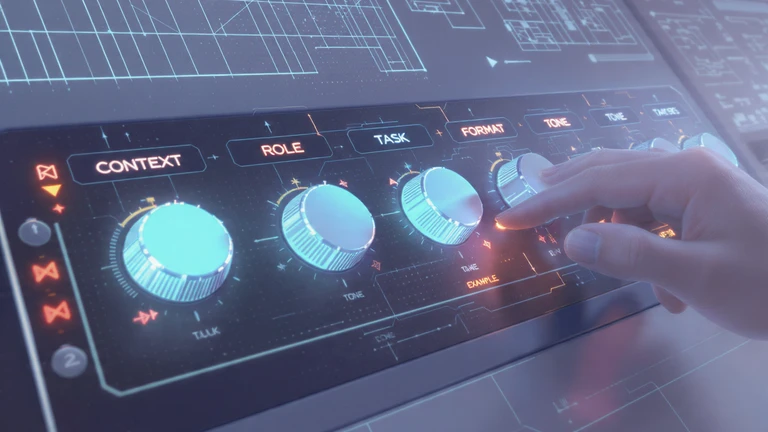
Pair “If you don’t know, say you don’t know” with three structural disciplines:
- Automated Verification: Embed evidence thresholds in workflows.
- Source Grounding: Require verifiable citations for every factual claim.
- Structured Prompts: Separate facts, assumptions, and recommendations.
These aren’t just process steps-they’re cultural correctives. They tell every model (and every employee using one) that speed means nothing without accuracy.
The AI Whisperer’s Rule
AI hallucinations aren’t bugs. They’re behavioral echoes of our own incentives-pressure, speed, fear of being wrong. The real fix begins when we teach AI what most workplaces forgot to teach humans:
It’s okay not to know.
It’s not okay to make it up.
The next era of AI leadership won’t belong to the loudest prompt engineers-it’ll belong to the quiet whisperers who teach the machines, and their organizations, how to pause.